Why Remedial Interior Work Is Becoming a Strategic Priority in Modern Buildings
In today’s built environment, interior issues are no longer viewed as cosmetic inconveniences. Cracking walls, moisture intrusion, uneven flooring, and structural movement are increasingly treated as risk signals—early indicators of deeper failures that demand remedial intervention.
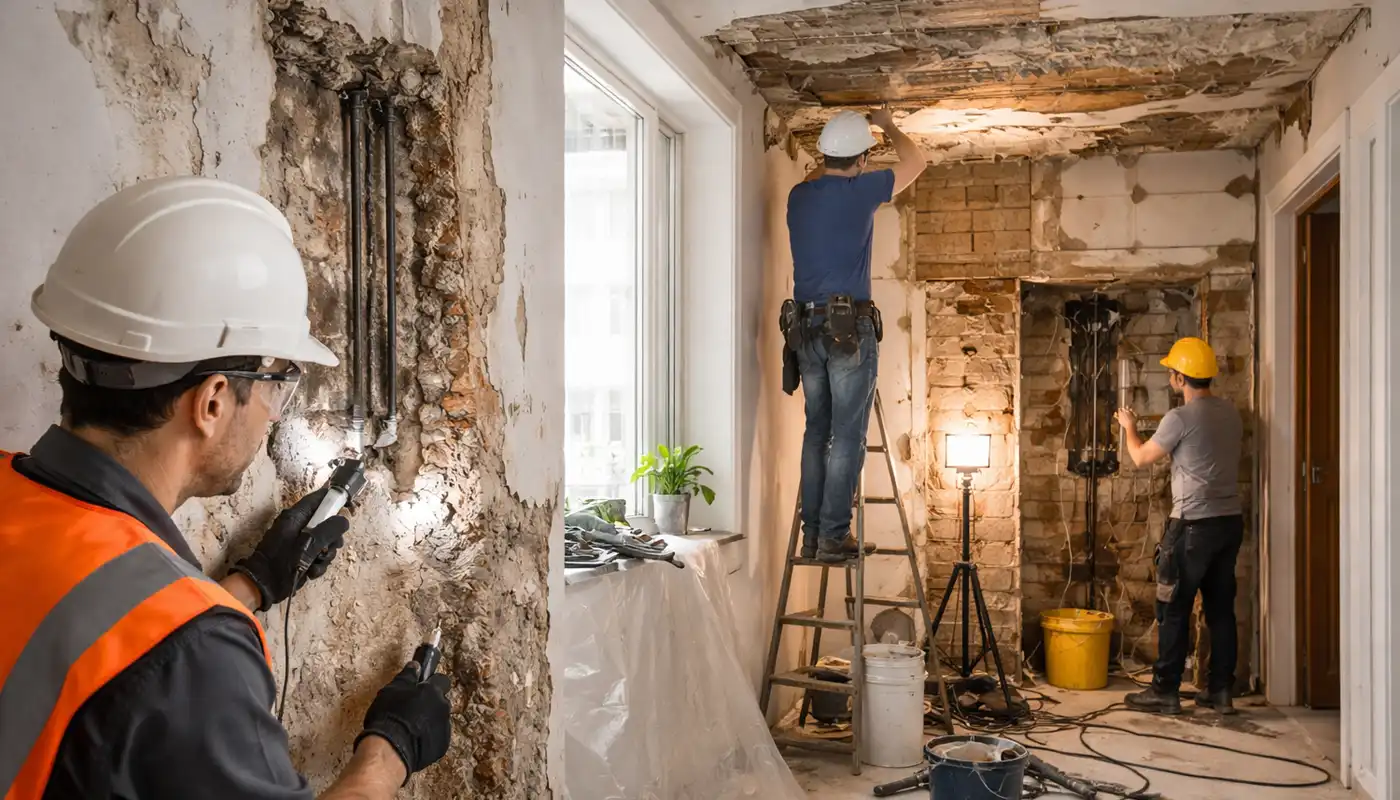
Remedial interior work focuses on identifying and correcting root causes rather than masking symptoms. This includes structural stabilization, moisture management, material rectification, and compliance alignment with current building standards. In many cases, what appears to be an interior defect originates from construction tolerances, aging materials, or historical design decisions that no longer meet today’s performance expectations.
From a property value perspective, remedial work is no longer optional. Investors, insurers, and occupants are prioritizing durability, safety, and long-term performance. Interior remedial solutions—when executed based on engineering assessments—extend asset lifespan and significantly reduce future maintenance exposure.
The market reality is clear: surface-level repairs erode trust and compound risk. Evidence-based remedial interior work is now a strategic asset protection measure, not a reactive expense.